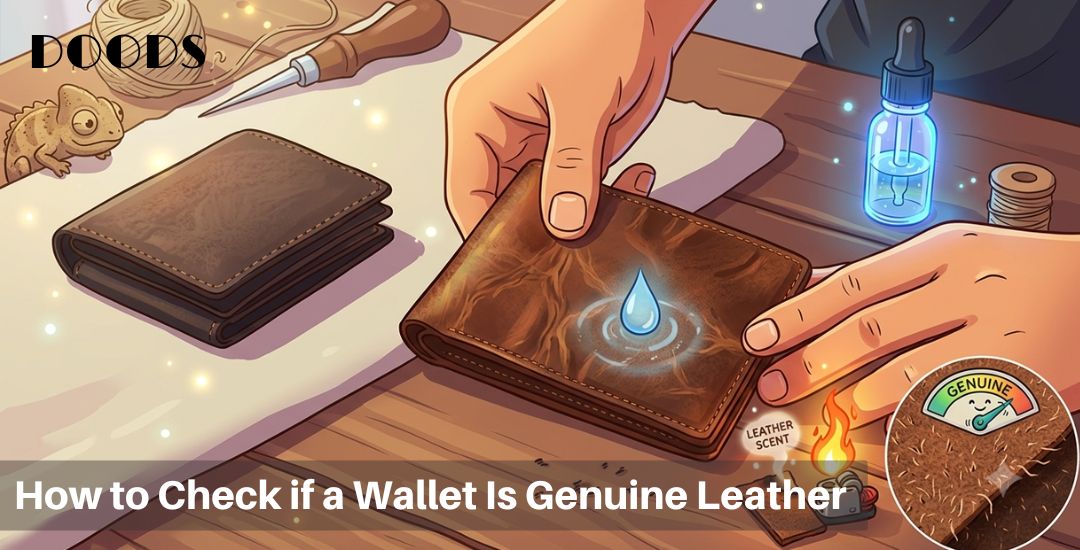
To check if a wallet is genuine leather, look at the cut edge, the grain and the smell, then press and fold it. Real leather has a fibrous edge, an uneven grain, an earthy smell and soft wrinkles. Fake (PU) leather has a smooth plastic edge, a repeating pattern and sharp creases.
Below are eight tests you can do in a shop or within minutes of opening a parcel, plus a decoder for the labels sellers use. Once you know the wallet is real, our guide on how to choose a leather wallet helps you pick the right grade, and the best leather wallet brands in India list shows brands that sell proper leather.
Summarize this page using your favorite AI tools,
Short Answer: How Can You Tell Real Leather From Fake?
Check the cut edge first. Real leather is rough and fibrous all the way through, while PU leather shows a smooth plastic film on a cloth backing. Then press the surface: real leather wrinkles like skin, and PU stays smooth or creases in sharp lines. No single test is perfect, so use at least three.
The 8 Tests at a Glance
| Test | Real leather | Fake (PU) leather |
|---|---|---|
| 1. Cut edge | Rough, fibrous, same material through | Smooth, plasticky, cloth layer visible |
| 2. Grain | Uneven pores and small marks | Repeating, identical pattern |
| 3. Press | Wrinkles and spreads like skin | Stays smooth or stretches flat |
| 4. Water drop | Absorbs slowly, darkens briefly | Beads up and sits on top |
| 5. Smell | Earthy, natural | Chemical or plastic |
| 6. Label | Names a grade | Says PU, faux, vegan or leatherette |
| 7. Flex | Soft rounded wrinkles | Sharp lines, white stress marks |
| 8. Price | Fits the grade | Too cheap for the claim |
Test 1: Look at the Cut Edge
This is the most reliable test and takes five seconds. Look at an unfinished edge, such as inside a card slot or under the flap. Real leather looks like compressed fibres, a bit like thick felt, and the colour continues through the thickness.
PU leather has a thin coating on top of a fabric backing, so the edge looks smooth and layered. If you can see a cloth weave underneath a plastic skin, it is not leather.
Caution: many leather wallets have painted edges. In that case check the inside of a slot or the base of the stitching instead.
Test 2: Study the Grain
Real hide has pores, small scars and slight differences in texture across the surface. No two wallets look exactly alike. PU leather is pressed with a pattern, so the same marks repeat at regular intervals.
Caution: low-grade genuine leather is also embossed with a printed grain. A perfectly uniform surface does not always mean fake, but an uneven, natural-looking surface almost always means real.
Test 3: Press and Pinch It
Press your thumb into the leather and push the surface sideways. Real leather wrinkles and creates small folds, the way skin does, and the wrinkles ease out when you let go. PU leather resists wrinkling and stays flat, or forms stiff creases.
Test 4: The Water Drop Test
Put one drop of water on an unseen spot, such as the back of the wallet. On unfinished or lightly finished leather, the drop soaks in slowly and darkens the spot for a minute or two. On PU, the drop stays on top as a bead.
Caution: heavily coated real leather can also repel water, so do not rule a wallet out on this test alone. Do it only on a wallet you own, and wipe it dry afterwards.
Test 5: Smell It
Real leather smells earthy and slightly sweet, from the tanning process. PU smells of plastic or chemicals. Treat this as a supporting test, because strong perfume or heavy dyeing can hide the smell.
Test 6: Read the Label and Listing
Sellers often use words that sound better than they are. Use the decoder table below to read the material field on a listing or tag.
Leather Label Decoder
| Label | What it means | Real leather? |
|---|---|---|
| Full-grain | Top layer of the hide, untouched | Yes, best grade |
| Top-grain | Top layer, sanded and finished | Yes, good grade |
| Genuine leather | Lower split layers, coated and embossed | Yes, low grade |
| Bonded leather | Leather scraps glued with a binder | Partly, weak |
| Pure or 100% leather | Marketing line, grade not stated | Ask for the grade |
| PU, faux, vegan, leatherette | Synthetic coating | No |
Test 7: Flex the Wallet
Fold the wallet along its natural crease and look at the bend. Real leather forms soft, rounded wrinkles that relax when released. PU forms sharp creases, and over time shows white stress marks and cracks along the fold. Do not bend it repeatedly, since that can damage the finish.
Test 8: Check the Price Against the Claim
Leather costs money. A wallet listed as full-grain for ₹300 does not add up. As a rough guide, genuine leather wallets start around ₹300 to ₹500, top-grain wallets usually sit above ₹800, and full-grain wallets above ₹1,500. A big gap between the price and the claim is a warning sign.
Our best leather wallet brands in India list shows the usual price range for each brand.
Skip the Burn Test
Some guides suggest burning a loose thread or a small corner. Do not do this on a wallet. The smoke is unpleasant, the damage is permanent, and the result is hard to read because coatings and dyes also change how leather burns. The eight tests above are safer and give a clear answer.
How to Check a Wallet Before Buying Online
You cannot touch the wallet, so use the listing to cut the risk.
Read the material field, not just the title. Look for a named grade.
Open customer photos in the reviews and zoom in on the edges and stitching.
Check the brand on its own website to see whether it states the leather type.
Check the return window before you pay.
On arrival, run tests 1, 3 and 7 straight away. If the wallet fails, photograph the edge and label and start the return.
Genuine Leather FAQs
Is "genuine leather" real leather?
Yes, but it is a low grade. It is made from the lower layers of the hide, then coated and embossed. It lasts around 3 to 5 years, while top-grain and full-grain last much longer.
Can a fake leather wallet smell like leather?
Some PU wallets are treated with a leather scent, so smell alone is not reliable. Use the edge, press and flex tests along with it.
Will the water drop test damage my wallet?
A single drop on an unseen spot, wiped dry quickly, will not harm finished leather. Avoid it on suede or very pale leather, which can stain.
Is PU leather bad?
It is not unsafe, but it is not durable. PU usually cracks and peels at the folds within months. It also does not develop the patina that real leather does.
How do I tell full-grain from genuine leather?
Full-grain shows natural pores and small marks, and the surface looks slightly uneven. Genuine leather looks uniform because the surface is coated and embossed. For help picking a grade, read how to choose a leather wallet.
Does colour tell me anything about quality?
Not directly. Dark colours can hide marks, so it is better to judge the edge and grain. If you are unsure which shade to buy, see the best wallet colour for men guide.
Final Check Before You Keep It
Run three tests: edge, press and flex. If two of the three say real leather and the label names a grade, keep the wallet. If they disagree, ask for a return.
For brands that state their leather grade clearly, start with the best leather wallet brands in India list.